


FOOD ADDITIVES
As the saying goes: “You are what you eat.” This is fine if you are aware of what you are eating and all ingredients are clearly disclosed. For the kosher consumer, the situation is very different. Many people would be quite surprised if they knew what they were really eating.
Most mystery ingredients in food come under the category of “food additives.” Flavoring is a major concern in Halacha. The Mishna (Avodah Zarah 5:2) states, זֶה הַכְּלָל, כֹּל שֶׁבַּהֲנָאָתוֹ בְּנוֹתֵן טַעַם, אָסוּר, any beneficial flavor ((נותן טעם לשבח from a non-kosher source renders the food not kosher. This is called “טעם כעיקר” — flavoring is like the original food (Chullin 98b). The Gemara in Pesachim (44b) brings two sources for this. The first source is the parsha of a Nazir, who is not allowed to drink anything that is derived from grapes. The pasuk (Bamidbar 6:3) says, “וְכָל מִשְׁרַת עֲנָבִים לֹא יִשְׁתֶּה,” which includes grape flavoring. The second source is in Parshas Matos, where the Torah says after conquering Midian, we were forbidden to use the pots and pans of the Midianim until they were kashered and the taste of non-kosher (בליעות) was removed from them (Bamidbar 31:23). The Shulchan Aruch (יורה דעה סי' צ"ב) seems to pasken טעם כעיקר דאורייתא. This seems clear in מין בשאינו מינו — dissimilar tasting food.
The Pri Chadash warns that a person should not light a cigarette from a non-kosher candle, as it is like eating non-kosher fats (quoted in Yechaveh Daas 2:17). Rav Sternbuch שליט"א, the head of the Eidah HaChareidis, cautions that people who vape (put vapor in their mouth) need to determine that the flavors inhaled are kosher. Commonly, glycerin (up to 70%) that is derived from animal or vegetable sources is used in the flavoring of e-cigarettes. The Magen Avraham (467:10) says that cigarettes made from tobacco soaked in beer are not acceptable for Pesach. All agree that flavoring is an issue all year and even more so on Pesach. Since the Halachos of flavoring are complex, and often depend on circumstances such as מין במינו או בשאינו מינו, and many other variables, when in doubt, a competent Rav should be asked.
As we see from the list below, “additives” are often listed as Natural, Artificial, or some other name to disguise the true ingredients. Often these ingredients have a good chance of being not kosher. The words Oleo, which often is beef fat, and natural vitamins added, may be from non-kosher fish, liver, etc. Long ago, the FDA established as law that certain amounts of contaminants are acceptable in government-approved food products. In frozen broccoli, for instance, up to 60 aphids, thrips or mites are allowed and are considered by the Food Administration as just one of the concessions we make in our industrial society in order to enjoy the convenience of prepared foods.

Shellac, a high-gloss glaze derived from the female lac (she lac) insect in India or Thailand, is used under the innocent names of “resinous glaze” and “confectioner’s glaze.” It is a prime example of the general public’s lack of knowledge concerning the source and origin of many food additives. Reb Moshe Feinstein has a teshuva concerning acceptable ways that it can be made. (Iggeros Moshe Y.D. 2:24)
The ingredients “carmine” which is known as natural red dye 4, C.I. 75470, E120 or “cochineal,” which is the current favored choice for red coloring in many foods, is but another example of how insects are legally finding their way into many common and popular food products. Starbucks, for instance, recently said that they will stop using it in the various products currently containing this bug-derived coloring. Most fruit cocktails and many bottled cherries continue to use it as it keeps the cherries which are dyed red from spreading their color to the other fruits.
When it comes to flavorings, it has long been the industry’s policy to mask the true nature of the additive under the generic term “natural flavoring.” This sounds very gentle — and downright healthy! Commonly, this additive means very sweet, non-kosher grape juice. The product is still “without added sugar,” but of course is not kosher. Similarly, the flavoring “ambergris,” which is derived from the sperm whale, is natural but not kosher. It is used in perfumes, cocktails, and medication.

Yet another such example is “civet absolute,” which is derived from the civet cat. Civet (zibetum, zibet) is secreted by the civet cat's perianal scent glands and is a common ingredient of frozen dairy desserts, baked goods, candies, puddings or gelatins.

Castoreum is a flavoring agent and enhancer from beavers’ anal glands. Some Swedish liquors use it and the FDA approves it as natural. These additives are offered to the unsuspecting consumer as “natural flavors,” which is legal, as they actually are “natural.” Such broad definitions allow for a typical breakfast of coffee, tomato juice, cereal and toast to possibly include the following legal, hidden ingredients:
- Insects
- Tomato juice: up to 10 fly eggs per 100 grams
- Cereal: up to 9 milligrams of rodent excreta and 50 insect fragments per 50 grams
- Non-dairy creamer: containing casein (a milk-derived sugar): “natural or artificial” flavoring could be from literally hundreds of sources including animal, vegetable, or synthetic.
- Enzymes are derived from living cells, either animal or plant.
- Thickening agents and preservatives as well are often animal-derived.
Some people may feel annoyed — or even downright angry — at discovering the truth about these hidden ingredients. However, to some, this lack of disclosure can even be life-threatening and lethal. A typical non-dairy creamer and non-dairy dessert topping lists “casein” in the ingredients, which is a milk-derived sugar. Similarly, many tuna manufacturers fail to reveal on their labels the fact that one of the ingredients, “hydrolyzed” vegetable protein, is often derived from whey, another dairy product. Imagine a person who is hyperallergic to any dairy product. Such a person could innocently purchase such products and unsuspectingly suffer a life-threatening allergic reaction to this supposedly “dairy” product and the deadly hidden ingredients in them.
How can allergy sufferers avoid such a terrifying scenario? Barring extensive research into each and every item in the supermarket, there is another way. That is, of course, relying on proper hechsherim. Before certifying a company kosher, the agency will check not only the ingredients but their true source as well. If the hydrolyzed vegetable protein in a can of tuna is from a dairy derivative, or the non-dairy creamer contains traces of a dairy-based source, the kosher symbol on the label will be followed by a “d.” This indicates to the veteran kosher consumer, who is familiar with the interpretation of such labels, that there is in fact a dairy derivative in this product, giving it a dairy status. This is why millions of non-Jews rely now on kosher certification to disclose the true status and ingredients of a product.
All products under kosher supervision are inspected on a regular basis to determine all aspects of each and every ingredient in that product, as well as the machinery used in the production of that product. If the machinery is dairy, often the product will be labeled “DE” indicating dairy equipment. Some Kashrus agencies will print a “D” for products containing dairy and products produced on machinery used for dairy.
In an article written by Gini Kopecky and printed in “Family Circle” magazine, Dr. Hugh Sampson of the Pediatric Allergy and Immunology Division at Baltimore’s Johns Hopkins University School of Medicine is mentioned as having found that a harmless can of tuna, which was not clearly labeled as containing dairy derivatives, had threatened the life of a young 3-year-old boy who was hyper-allergic to dairy products. Unbeknownst to the parents, this can of tuna contained a dairy-based ingredient. A near-tragedy would have been prevented had these parents known that the “d” on the label of this can of tuna indicated that this product should not be used by a person with a severe milk allergy. Today, many years later, many non-Jews are aware of the kosher supervision on a product being a more reliable source of full disclosure of ingredients.
As ingredients become more and more complex and obscure, we propose that the FDA and food manufacturers learn from the kosher supervisory industry how to better provide full disclosure of each ingredient to the general public. Clearly, the kosher consumer cannot rely on merely reading the ingredients. It is also prudent for many more people in this country to learn more about kosher food symbols and how to look for them and understand them. An educated consumer stands the best chance of remaining a healthy one!
Ingredients & Additives
(Bold indicates kosher supervision is required or that the product is not kosher)
- Acetic acid – found in plant juices, milk, oil, and sometimes muscles. It is the final product of many aerobic fermentations. When it is derived from petroleum, it is kosher, pareve with supervision. Acetic acid is the active component of vinegar.
- Ascorbic acid or Vitamin C – kosher, pareve without supervision.
- Agar-agar – Source: seaweed. Use: a substitute for gelatin (cream and in confectionery items). Kosher, pareve without supervision.
- Albumin – Sources: blood (serum albumin), milk (dairy), eggs. Use: coagulant and stiffener in baked goods. Requires supervision.
- Alginate – Source: seaweed. Forms: calcium alginate, alginic acid, sodium alginate, propylene glycol alginate. Uses: thickening and stabilizing agent in pastry, jelly, ice cream, cheese, candy, yogurt, canned frosting, whipped cream, and beer. Kosher, pareve without supervision.
- Alginic acid – see alginate.
- Alpha amylase – Source: hog pancreas. Use: in flour to breakdown any starches. Not kosher.
- Alum aluminum sulfate – Source: earth. Also known as cake alum or patent alum. Use: clarifying oils and fats. Kosher, pareve without supervision.
- Ambergris – Source: whale intestine. Use: flavoring (also used in perfume). Not kosher.
- Anise – Source: fruit of an herb (in the parsley family). Use: flavoring foods in beverages. Kosher, pareve without supervision.
- Argol – Source: sediment in wine casks during fermentation and storage. Use: in the manufacture of tartaric acid and vinegar from malt. See also Cream of tartar and Tartaric acid. There is a debate about whether or not it can be used without supervision, so one should consult his local Orthodox Rabbi.
- Ascorbic acid (Vitamin C) – Source: synthetic or corn. Use: nutrient. Kosher, pareve without supervision.
- Ascorbate Palmitate – Source: synthetic and palm oil. Use: preservative. Kosher, pareve without supervision.
- Benzoic acid – Source: synthetic. Use: preservative. Kosher, pareve without supervision.
- BHA (Butylated hydroxyanisole) – Source: synthetic. Use: as an antioxidant in cereals, stabilizers, shortenings, and potato flakes and granules. Kosher, pareve without supervision when found in corn oil.
- BHT (Butylated hydroxytoluene) – Source: synthetic. Use: as an antioxidant in beverages, desserts, cereals, glazed fruits, dry mixes for beverages, and potato flakes and granules. Kosher, pareve without supervision when found in corn oil.
- Calcium alginate – see Alginate.
- Calcium carbonate – Source: limestone. Use: tooth powder and in removing acidity of wine. Kosher, pareve without supervision.
- Calcium chloride – Source: synthetic. Use: in canned goods and in cottage and cheddar cheeses as a preservative. Kosher, pareve without supervision.
- Calcium citrate – see Citric acid.
- Calcium disodium (EDTA) – Source: synthetic. Use: flavor retention in canned soda and canned white potatoes; as a preservative in dressings, egg products, oleomargarine, potato salad, lima beans, mushrooms, pecan pie filling, and spreads. Kosher, pareve without supervision.
- Calcium propionate – Source: synthetic. Use: preservative. Kosher, supervision preferred.
- Calcium stearate – Source: a compound of calcium and stearic acid. (Important: see Stearic acid.) Use: anti-caking ingredient in some spices (especially garlic salt and onion salt) and extensively in tablets. Requires kosher supervision.
- Calcium sorbate – Source: synthetic. Use: preservative. Kosher, pareve without supervision.
- Calcium sterol lactylate – Source: milk or soybeans. Use: instant mashed potatoes. Requires kosher supervision.
- Calcium stearoyl lactylate – Source: chemical reaction of stearic acid and lactic acid. Use: as a dough conditioner, whipping agent and as a conditioner in dehydrated potatoes. Requires kosher supervision.
- Caprylic acid – Sources: palm oil, coconut oil. Use: preservative and flavoring. Kosher, pareve without supervision.
- Carbon black – Source: synthetic. Use: black coloring in confectionery. Requires kosher supervision.
- Carmine (cochineal) – Source: insect. A crimson pigment derived from a Mexican species of scale insect (coccus cacti). Use: coloring in red apple sauce, fruit cocktail, confections, baked goods, meats, and spices. Not kosher.
- Carrageenan – Sources: seaweed and fresh moss. Use: as a substitute for gelatin (an emulsifier, stabilizer, and food thickener). Kosher, pareve without supervision.
- Caramel – Source: sugar or glucose. Use: coloring foods, beverages, and confectionery items. Kosher, pareve without supervision.
- Casein – Source: milk, hence dairy. Uses: stabilizer for confectionery, texturizer for ice cream and sherbets, or as a replacement for egg albumin. Because it is precipitated by acid or by animal or vegetable enzymes, requires kosher supervision.
- Catalase – Source: cow liver. Use: coagulant. Requires kosher supervision.
- Cholic acid – Source: animal bile. Use: emulsifier in dried egg whites. Requires kosher supervision.
- Choline bitartrate – Source: animal tissue. Use: nutrient (B-complex vitamin). Requires kosher supervision.
- Citric acid – Sources: fruits and vegetables, molasses, and grain. Use: antioxidant, sugar solubilizing in ice cream and sherbet, fruit juice drinks, and canned and jarred products, including jelly, cheese, candy, carbonated beverages, instant potatoes, wheat, chips, potato sticks, wine. Kosher, pareve without supervision.
- Civet, absolute – Source: cats. Use: flavoring for beverages, ice cream, ices, candy, baked goods, and chewing gum. Not kosher.
- Cocoa butter – Source: cocoa bean. Use: chocolate coatings. Kosher, pareve without supervision.
- Coconut oil – Source: coconut. Use: In the manufacture of edible fats, chocolate, and candies; in baking in place of lard. Requires supervision (see Oil).
- Confectionery glaze – See Resinous glaze and Shellac.
- Corn starch – Source: Corn. Kosher, pareve without supervision.
- Cream of tartar (Tartaric acid) – Source: argol, the stony sediment of wine casks. Once the liquid residue has been removed from the argols by aging one year and drying, the argols are permissible. Use: in a variety of confections and in the preparation of baked goods.
- Cysteine (L form) – Source: an amino acid, human and horse, or synthetic (sometimes from deceased women). Use: nutrient in bakery products. There is a debate about whether or not it can be used without supervision, so one should consult his local Orthodox Rabbi.
- Dextrin – Source: starch. Use: prevents caking of sugar in candy, encapsulates flavor oils in powdered mixes, thickener. Kosher, pareve without supervision.
- Dextrose (corn syrup) – Source: starch. Use: sweetener, coloring agent in beverages, ice cream, candy, and baked goods. Kosher, pareve without supervision.
- Dilauryl Thiodipropionate – Source: synthetic. Use: preservative. Kosher, pareve without supervision.
- Dough conditioners – Source: calcium stearoyl-2-lactylate, or animal fat. Use: to improve the texture of bread. Often it will contain mono- and diglycerides. Requires supervision.
- Emulsifiers – Source: fats (animal, vegetable, or synthetic). Use: binding oils and water, thickening, a preservative in baked goods, reducing ice crystals and air bubbles in ice cream. Requires kosher supervision.
- Erythorbic acid – Source: synthetic. Use: preservative. Kosher, pareve without supervision.
- Eschalots (shallot) – Source: an onion-like plant. Bulbs used like garlic for flavoring. Kosher, pareve without supervision.
- Ethyl vanillin – Source: synthetic, bark of spruce tree, or wine alcohol. Use: as a flavor instead of vanilla or to fortify it. Kosher, requires supervision.
- Fats – Source: animal or vegetable. Substances that are solid at room temperature are fats; those that are liquid at room temperature are oils. Requires kosher supervision.
- Fatty acids – Source: animal or vegetable fats. Use: emulsifiers, binder, lubricants. Requires kosher supervision.
- Filberts – Source: a type of hazelnut; when raw or dry roasted. Kosher, pareve without supervision.
- Glucose – Source: fruits and other plants such as potatoes and corn (see Dextrose). Use: sweetener, coloring agent. Kosher, pareve without supervision.
- Glyceride – Source: see mono- and diglycerides.
- Glycine – Source: gelatin, animal or vegetable oil. Use: sometimes in cereals. Also as a flavor enhancer. Requires kosher supervision.
- Glycerol monostearate – Source: glycerol monostearate may be of animal origin. Requires kosher supervision.
- Glycerin – Source: beef fat, petroleum, or vegetable. Use: as a solvent or humectant (maintains the desired level of moisture). Requires kosher supervision.
- Gum Arabic, Gum acacia – Source: trees. Use: thickening agent, emulsifier, stabilizer. Kosher, pareve without supervision.
- Gum base – Source: trees (chicle, natural rubber, etc.), synthetic butyl rubber, paraffin, polyethylene, vinyl, resin, glycerin, glycerol monostearate. Use: in the manufacture of chewing gums. Requires kosher supervision..
- Gum guaiac – Source: trees. Use: antioxidants. Kosher, pareve without supervision.
- Guar gum – Source: plants. Use: extender for pectin, stabilizer and thickener for spreads, syrups, sauces, salad dressing, and licorice. Kosher, pareve without supervision.
- Gum tragacanth – Source: shrubs. Use: thickening agent. Herb derived from green leaves or herbaceous part of the plants. Kosher, pareve without supervision.
- Invert sugar (inversol nulomoline colorose) – Source: cane sugar. Use: sweetener. Kosher, pareve without supervision.
- Invertase (invertin) – Source: yeast. Use: preparation of invert sugar from sucrose. Kosher, pareve without supervision.
- Lactic acid – Sources: molasses, corn starch, glucose. Use: preservative, flavoring. (Lactic acid can also be produced from whey, in which case it is dairy, but its use is restricted to ice cream and cream cheese). Kosher, pareve without supervision.
- Lactose (milk sugar) – Source: whey. Use: sweetener, humectant, and nutrient. Kosher, dairy without supervision.
- Lauric fats – Source: coconut, palm oil. Use: with or instead of cocoa butter. Kosher, pareve without supervision.
- Lecithin – Source: soybeans, corn oil. Use: emulsifier and preservative, especially in chocolate. Kosher, pareve without supervision.
- Lipids – Source: animal or vegetable fats. Use: shortening, flavoring, thickener. Requires kosher supervision.
- Lactalbumin – see Albumin.
- Lysine (L and DL forms) – Sources: casein, fibrin, blood. Usually synthesized. Requires kosher supervision.
- Magnesium stearate – Source: stearic acid. From tallow, vegetable oils, or synthetic. Use: anti-caking agent. Requires kosher supervision.
- Malt syrup – Source: malt and barley. Use: emulsifier and starch dissolving. Kosher, pareve without supervision.
- Mannitol – Source: fungi. Use: sweetener. Kosher, pareve without supervision.
- Methylparaben – Source: synthetic. Use: preservative. Kosher, pareve without supervision
- Methyl P hydroxy benzoate – see Methylparaben.
- Mono- and diglycerides – Source: animal and vegetable. Use: stabilizer, emulsifier, softener, preservative. Most are animal products. Mono- and diglycerides do not necessarily have to be listed in the ingredients. Requires kosher supervision.
- Monosodium glutamate – Source: sugar, plants, beets, and corn. Use: flavor enhancer. Kosher, pareve without supervision.
- Musk – Source: deer glands, synthetic. Use: in flavorings for beverages, ice cream, candy, baked goods, and chewing gum. Now it is usually produced synthetically. Kosher supervision required.
- Natural fruit flavors (natural flavoring) – concentrated under vacuum or freeze dried. Concentrated fruit pulp that is used in confectionery usually requires fortification with some synthetic flavor. Can contain grape juice, as well as many other non-kosher substances. Requires kosher supervision.
- Oil of lemon – Source: lemon peel. Kosher, pareve, without supervision.
- Oil of rose – Source: distilled from fresh rose petals. Comes mostly from Bulgarian Damask rose. Kosher, pareve without supervision.
- Oil of caraway – Source: seeds of Carum carvi. Grown in Holland and Central to Southern Europe. Flavoring for chocolate and coatings. Kosher, pareve without supervision.
- Oil of cardamon (grains of paradise) – Source: Alleppey cardamon, trees from India. Use: enhance the flavor of ground coffee, butter, chocolate, liquor, spice and vanilla flavoring. Kosher, pareve without supervision.
- Oil of cassia (cassia bark) – Source: leaves and twigs of the Chinese cinnamon. Use: for cocoa flavor in biscuits, cakes, ice cream, and beverages. Kosher, pareve without supervision.
- Oil of celery – Source: celery plant. It comes primarily from France. Use: usually as flavoring for cocoa, chocolate, and other confections. Kosher, pareve without supervision.
- Oil of cinnamon – Source: under the bark of the Cinnamomum zeylanicum tree. Found in Seychelles and Ceylon. Use: to enhance fruit flavorings. Kosher, pareve without supervision.
- Oil of peppermint – Source: dried plant leaves. Use: flavoring. Kosher, pareve without supervision.
- Oleic acid – Source: fats and oils (animal or vegetable). Use: defoaming, flavoring. Requires kosher supervision.
- Oxysterins – Source: Glycerides, stearic acid. Use: prevents oil from clouding. Requires kosher supervision.
- Ox bile – Source: ox bile. Use: preservative and emulsifier in dried egg whites. Requires kosher supervision.
- Ox gall – see Ox bile.
- Pepper cream – Source: herb. Use: spice. Requires diglycerides or other emulsifiers to mix. Kosher, pareve, requires kosher supervision.
- Pepsin – Source: enzyme, usually extracted from hog stomachs, but can be synthetic. Use: coagulant in cheese. Can be produced from kosher animals. Requires kosher supervision.
- Polyglycerol esters of fatty acids – Source: fats and oils, animal or vegetable. Requires kosher supervision.
- Polysorbate 60, 65, 80 – Source: stearic acid (also called “tween”). Use: emulsifiers, especially in “non-dairy” products. Requires kosher supervision.
- Potassium bisulfite – Source: synthetic. Use: preservative. Kosher, pareve without supervision.
- Potassium caseinate – Source: milk. Use: stabilizer and texturizer. Requires kosher supervision.
- Potassium metabisulfite – Source: synthetic. Use: preservative. Kosher, pareve without supervision.
- Potassium sorbate – Source: berries or synthetic. Use: preservative. Kosher, pareve without supervision.
- Propionic acid – Source: synthetic or may be made from cheese. Use: mold inhibitor, preservative. Requires kosher supervision.
- Propyl gallate – Source: synthetic or from nuts (galls) produced by insects. Use: preservative. Requires kosher supervision.
- Propylene glycol (alginate) – Source: synthetic. Use: emulsifier, stabilizer, solvent. Kosher, pareve without supervision.
- Propylparaben – Source: synthetic. Use: preservative. Kosher, pareve without supervision.
- Release agents – Source: oils, mineral oil, monoglycerides or synthetic. Use: keeps heated foods from sticking to equipment, utensils, and packaging. These need not be listed in the ingredients. Requires kosher supervision.
- Resinous glaze – Source: insect secretion. Use: coating candies and pills. While there are authorities who permit these glazes on the grounds that they are non-edible, there are other authorities who forbid them.
- Rennet – Source: animal enzymes. Derived from the lining membranes of the stomach of suckling calves. Use: coagulant and curdling agent especially in cheese and other dairy products. A vegetable enzyme similar to rennet is available as a substitute, but even if it is used, supervision is required. Hard cheese made by gentiles without constant supervision, even if made with completely kosher ingredients, is not kosher. (See cheese article.) Requires kosher supervision.
- Rennin – see Rennet.
- Serum albumin – Source: blood. See Albumin. Not kosher.
- Shellac – Source: insect secretion. Use: in glaze for confectionery products and in chocolate panning. See Resinous glazes.
- Shortenings – Source: oil. Use: to make baked goods light and flaky. Factories often make both animal and vegetable shortenings on the same equipment. Requires kosher supervision.
- Sodium alginate – Source: seaweed or kelp. Use: as a stabilizer. Kosher, pareve without supervision.
- Sodium ascorbate – Source: synthetic. Use: preservative. Kosher, pareve without supervision.
- Sodium benzoate – Source: synthetic origin. Use: preservative. Kosher, pareve without supervision.
- Sodium bisulfite – Source: synthetic. Use: preservative. Kosher, pareve without supervision.
- Sodium caseinate – Source: milk and cheese. Use: texturizer in “non-dairy” creamers and instant mashed potatoes. Kosher, dairy. Requires kosher supervision.
- Sodium citrate – Source: synthetic. Use: emulsifier and buffer in processed produce. Kosher, pareve without supervision.
- Sodium lauryl sulfate – Source: synthetic. Use: detergent, whipping agent, an emulsifier (in egg products) and surfactant (in beverages). Kosher, pareve without supervision.
- Sodium meta bisulfate – Source: synthetic. Use: preservative. Kosher, pareve without supervision.
- Sodium propionate – Source: synthetic origin, or on rare occasions cheese. Use: mold preventative. Kosher, supervision preferred.
- Sodium nitrate – Source: synthetic. Use: preservative. Kosher, pareve without supervision.
- Sodium sorbate – Source: synthetic or from corn. Use: preservative. Kosher, pareve without supervision.
- Sodium sulfite – Source: synthetic. Use: preservative. Kosher, pareve without supervision.
- Softeners – Source: animal or vegetable. Use: in chewing gum. Requires kosher supervision.
- Sorbic acid – Source: berries, corn or synthetic. Use: mold inhibitor. Kosher, pareve without supervision.
- Sorbitan monostearate – Source: Stearic acid. Use: emulsifier, defoamer, flavor disperser. Requires kosher supervision.
- Span – see Polysorbate.
- Spearmint oil – Source: the herb Mentha viridis. Use: primarily as flavoring in chewing gum. Kosher, pareve without supervision.
- Sperm oil – Source: whale. Use: release agent and lubricant in baking pans. Not kosher.
- Spices – Source: dried vegetable product derived from any part of the plant, whether rot, stem, bark, fruit, bud, or seed. Without additives, it is kosher, without supervision.
- Stannous chloride – Source: synthetic. Use: preservative. Kosher, pareve without supervision.
- Stearic acid – Source: animal or vegetable oil. Use: in butter and vanilla flavoring, softener in chewing gum. Requires kosher supervision.
- Stearyl lactylic acid – Source: fats and oils. Use: emulsifier. Requires kosher supervision. (Kosher forms are often dairy.)
- Sulfur dioxide – Source: synthetic gas. Use: preservative. Kosher, pareve without supervision.
- Tartaric acid – see Cream of tartar.
- Tween and Span – see Polysorbate.
- Thiodipropionic acid – Source: synthetic. Use: preservative, or from cheese. Requires kosher supervision.
- Tocopherols – Source: synthetic, or soybeans. Use: preservative, nutrient (vitamin E). Kosher, pareve without supervision.
- Tricalcium phosphate – Source: synthetic. Use: anti-caking agent, bleaching agent. Kosher, pareve without supervision.
- Turmeric – Source: herb. Use: spice, as a powder. (Often used in its oleo resin form for use in pickling brine and mustard with glycearides added.) Kosher, requires supervision.
- Vanilla – Source: bean. Use: flavoring, it may be processed with glycerin. Requires kosher supervision.
- Vanillin – Source: bark of spruce tree. Use: flavoring. Kosher, pareve without supervision.
- Vegetable shortening – see Shortening.
- Vegetable oil – see Oil.
- Vegetable gums – Use: substitute for gelatin in desserts and candies. Kosher, pareve without supervision. Also see Gum.
- Whey – Source: cheese, – dairy. Use: binder and flavoring agent, requires supervision.
The following do not require Hashgacha:
- Air freshener
- Antibiotics
- Apple sauce (unflavored)
- Isopropyl alcohol
- Aluminum foil
- Aluminum pans
- Aluminum cupcake holders
- Ammonia
- Baking soda
- Baking powder
- Beer (unflavored-domestic). Note: from micro-brewery or from Israel, Hashgacha is required
- Bleach
- Bran (no additives)
- Buckwheat (no additives)
- Candles
- Carob powder (pure)
- Castor oil
- Charcoal briquets
- Cocoa – pure, with no additives
- Coffee – pure – without flavoring.
- Coffee substitute from grains – pure grains only
- Coffee filters
- Corn starch
- Cornmeal – pure
- Crockpot liners
- Dental floss
- Dried Fruit (most — check list above) – with no oil or other ingredients listed (except for the usual preservatives, such as potassium sorbate, sulfur dioxide, and sodium bisulfate)
- Eggs
- Farina (plain)
- Flour – plain only.
- Fruits – Fresh, Frozen, Canned. Only without additives and without bug issues (berries, etc.) or from Israel. (All fruits from Israel are subject to having terumos and maasros taken from them. Care must also be taken to ensure that they are not from shemittah years. Therefore, any product from Israel containing fruit, vegetables, or their juices requires a reliable certification.)
- Gin
- Gloves
- Grains (raw)
- Guar gum
- Honey (unflavored)
- Injections
- Intravenous
- Lip gloss (all)
- Molasses
- Maraschino cherries – without added flavoring or coloring
- Milk (white) – At one point in history, it was common to obtain milk from a farmer who typically kept many types of animals in his barn. Chazal were concerned that non-kosher milk may be added to the kosher milk, and required supervision during the milking process (Avodah Zarah 35b). This renders the milk “Chalav Yisroel.” According to Reb Moshe Feinstein zt”l, in the US and Canada as well as many other developed countries which have strong governmental oversite on the purity of milk, all unflavored milk commercially produced has the status of Chalav Yisroel and does not require a hechsher (Iggeros Moshe Y.D. 1:47). Reb Moshe does add that it would be appropriate for baalei nefesh to be stringent and only use standard supervised milk. This will be indicated with the words “Chalav Yisroel — חלב ישראל” on the container.
- Nuts – plain with no oil or other ingredients (besides salt) on the label, and only when they have been dry roasted.
- Oats
- Oven cleaner
- Paper plates
- Paper bags
- Pectin – (from fruit)
- Petroleum
- Plastic bags
- Plastic wraps
- Plastic plates, bowls
- Plastic tableware
- Popcorn kernels – plain, with no oil, flavoring, etc.
- Raisins – plain, with no oil listed on the label.
- Raw nuts
- Rice – plain, with no flavor or seasoning added.
- Riboflavin
- Rock candy – unflavored only.
- Rum rye – straight liquor
- Saccharin
- Sake – pure
- Salt
- Seltzer (unflavored)
- Shampoo
- Silver polish
- Soap
- Sorbitol
- Soy beans
- Spices – pure
- Starch
- Styrofoam products
- Sugar
- Tea – plain, with no added ingredients or flavorings (i.e. black, orange pekoe)
- Toothpicks
- Vegetables – fresh and frozen – pure. Care must be taken to check for worms in leafy vegetables.
- Water (unflavored)
- Wheat
- Wheat germ – with no added ingredients.
The Following Dried Fruits Do Not Require Certification:
- Apricots
- Dates
- Figs
- Goji berries
- Peaches
- Nectarines
- Pears
- Pineapples
- Prunes
- Raisins (domestic without additives)
Fresh Fruit and Vegetables
- All plain fresh fruit in the U.S. that does not have an insect consideration does not require kosher certification. This is true in supermarket plastic containers when the fruit is cut up as well as in plastic bags. (Street corner vendors can be an issue, as they are more likely to use the same knife for cutting fruit and cutting their non-kosher lunch sandwiches.)
- All fresh fruit and vegetables that are not from Israel and do not contain added ingredients such as flavoring are fine during the year. This includes products that state “with wax coating.” As mentioned above, leafy vegetables must be determined to be insect-free.
Spices
The following spices (without additives listed above) are permitted even without Hashgacha in dry form (ground, chopped, whole):
- Anise
- Allspice
- Basil
- Bay Leaf
- Black cumin
- Caraway
- Cardamom
- Cayenne pepper
- Chervil
- Chia seeds
- Chili pepper
- Chives
- Cilantro
- Cloves
- Confectioner’s sugar
- Coriander
- Cream of tartar
- Cumin
- Dill
- Fennel seeds
- Fenugreek seeds
- Garlic
- Ginger
- Gold Leaf
- Lemon grass
- Mace
- Marjoram
- Mint
- Mustard powder
- Mustard seed
- Onion
- Oregano
- Paprika
- Parsley
- Pectin (pure)
- Pepper
- Persimmons
- Pink Himalayan salt
- Poppy seeds
- Rosemary
- Saffron
- Sage
- Salt
- Spelt flour
- Spirulina powder
- Sugar
- Sumac
- Tapioca starch flour
- Tarragon
- Thyme
- Turmeric
- Turbinado
- Turmeric
- White pepper
Eretz Yisroel
Baruch Hashem, some find the opportunity during this time to visit Eretz Yisroel. The following Hashgachos are accepted by most:

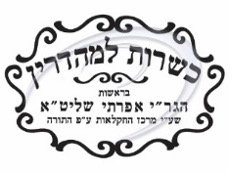



Above symbols from left to right: Badatz She’eiris Yisroel, Kashrus Lemehadrin – Rabbi Efrati, Eidah HaChareidis, Rabbi Seckbach, Rabbi Landau, Rabbi Rubin
The following contacts are for informational purposes only:
- Agudas Yisrael – 02-538-5251 (office) 02-538-5145 (fax)
- Badatz Mehadrin (R’ Avraham Rubin) – 08-939-0816 (office) 08-939-0818 (fax)
- Beit Yosef – 02-655-0550 (office) 02-02-651-0580 (fax)
- Belz – Machzikei Hadas – 02-501-6777 (office) 02-537-4001 (fax)
- Chasam Sofer Bnei Brak – 03-579-2601 (office) 03-579-5175 (fax)
- Chasam Sofer Petach Tikvah – 03-931-7040 (office) 03-904-4440 (fax)
- Chief Rabbinate Fraud Division – 02-531-3163 (office) 02-531-3169
- Chief Rabbinate Import Division – R’ Yitzchak HaCohen Arazi 02-531-3137 (office) 02- 02-537-7875 (fax)
- Rabbi Yosef Efrati, Kashrus l’Mehadrin – 08-863-4225 (office) 08-859-2737 (fax)
- Eidah HaChareidis – 02-670-0205 (office) 02-625-4975 (fax)
- Eidah HaChareidis Sephardi – 02-582-0755 (office) 02-532-6180 (fax)
- Jerusalem Rabbinate Kashrus Dept – 02-621-4888 (office) 02- 02-621-4832 (fax)
- Kehillas Yerei’im – 02-532-2101 (office) 02-581-5966 (fax)
- R’ Yehuda Leib Landau (Bnei Brak) – 03-618-2647 (office) 03-579-8967 (fax)
- Nvei Tzion – 03-676-4494 (office) 03-674-2883 (fax)
- OK Israel – 03-909-5848 (office) 03-909-5877 (fax)
- OU Israel – 02-560-9122 (office) 02-563-0061 (fax)
- She’eiris Yisroel – 03-677-3330 (office) 03-677-7030 (fax)
- Yoreh Deah (Rav Machpud) – 03-676-5888 (office)
To sign up for our mailing list, please go to www.kosherquest.org and enter your email address, or contact us and we will add it.